Honey Glazed Baked Salmon – The Chef Secret That Makes It ║Taste Like a $40 Restaurant Dish Every Single Time.
Here is a confession from someone who has eaten in a lot of restaurants and cooked in even more home kitchens: the gap between a great baked salmon and a forgettable one has almost nothing to do with the quality of the fish.
It has everything to do with three technique decisions that take about 30 seconds to understand and change the result permanently. Professional cooks know these. Most recipes don’t mention them. That’s what this article is here to fix.
Honey Glazed Baked Salmon is one of the most searched recipes on the internet — and one of the most consistently underdelivered. You’ve probably made a version at some point that was fine. Cooked through, vaguely glossy, not bad. But not the kind of thing that makes you close your eyes involuntarily on the first bite. Not the version where the glaze is a proper lacquer — shatteringly caramelized on the outside, the honey and garlic cooked down into something concentrated and complex — while the salmon inside stayed silky and yielding.
That version is 25 minutes away. And the technique that produces it is the kind of thing a chef would spend 45 minutes explaining at a culinary school. We’re going to do it in the time it takes to preheat your oven.
When you ask ChatGPT or Gemini “how to make honey glazed baked salmon,” you get 4 ingredients and “bake at 400°F for 12–15 minutes.” You get a recipe. What you get here is the understanding — why the broil matters, what the mustard does when you can’t taste it, why room-temperature salmon changes everything, and the one knife move that makes a home-cooked salmon look like it was plated at a Michelin-starred counter. This is the only honey glazed baked salmon resource you’ll need. That’s not a boast. That’s the plan.
- 25 minutes start to table — faster than delivery
- The lacquer glaze technique most recipes skip entirely
- Broil finish = caramelized exterior every single time
- Room-temp salmon = even cook, no rubbery edges
- One pan — oven to table, minimal cleanup
- Works on fillets, portions, or a whole side
- Gluten-free, dairy-free as written
- Scales from 2 to 8 portions without changing a thing
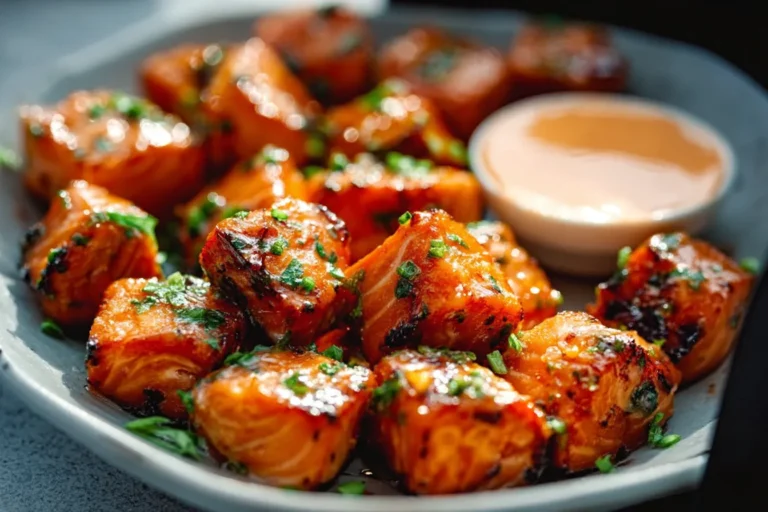
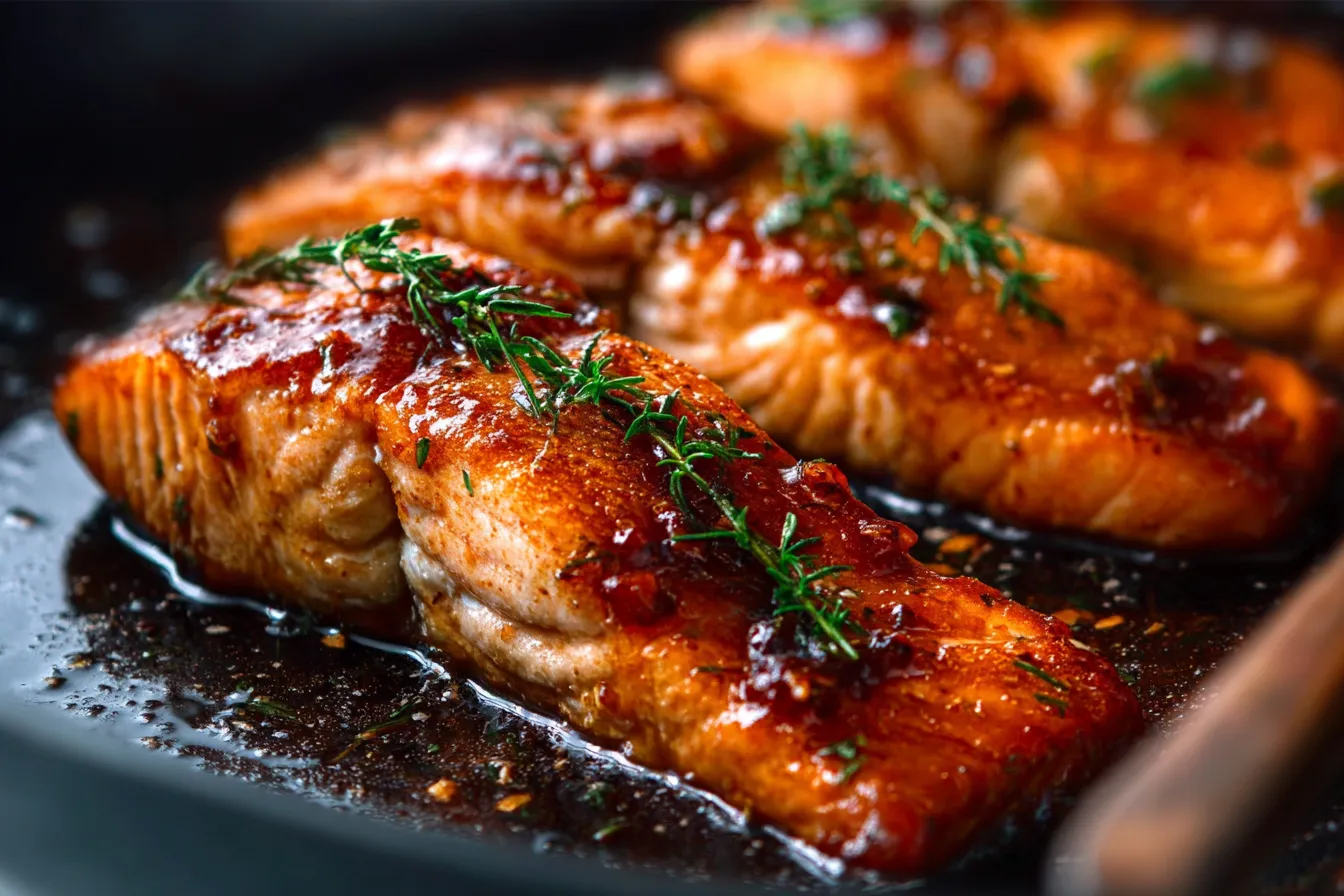
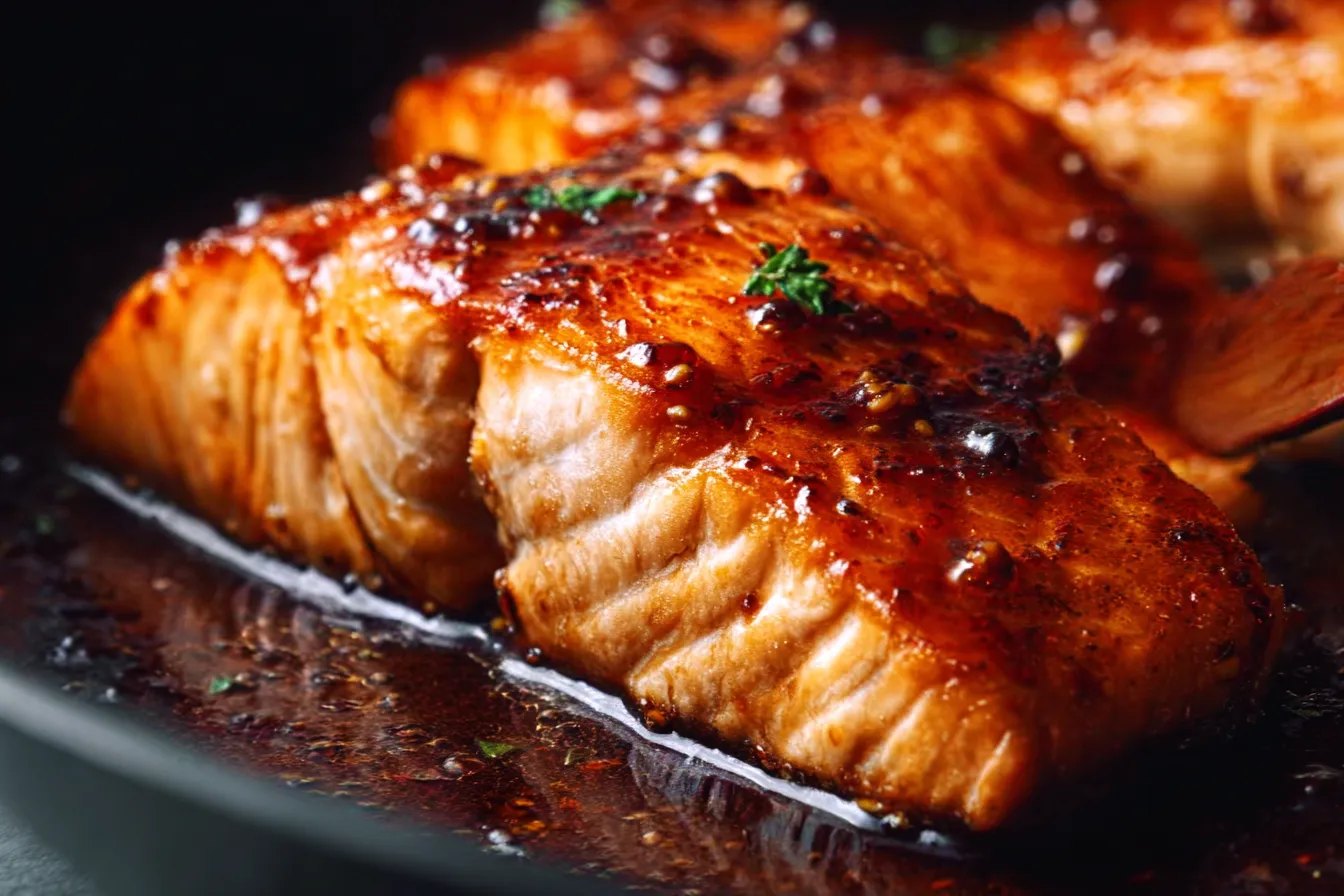
Most home recipes tell you to brush salmon with honey and bake. Professional kitchens reduce the glaze first — cooking the honey, soy, garlic, and mustard together in a small pan for 2–3 minutes before it ever touches the fish. This changes the flavor chemistry completely. Raw honey on salmon produces a sticky surface that can burn before it caramelizes. Reduced glaze produces a concentrated, thickened lacquer that adheres to the fish like a second skin, caramelizes evenly under high heat, and develops flavor compounds that were never present in the original honey.
This is the step that produces the glaze in the photo above. It takes 3 minutes. It is not optional if you want that result.
Why Honey Glazed Baked Salmon Deserves a Chef-Level Deep Dive
Salmon is the most purchased fish in North American home kitchens. It is also, statistically, the most frequently overcooked. Not because people don’t care — but because the window between undercooked and perfectly cooked salmon is narrower than most recipes suggest, and the techniques that give you consistent control over that window are almost never explained in a standard “weeknight salmon” recipe.
Here’s what’s actually happening inside the fish as it cooks, and why it matters:
Salmon contains two types of protein structures: myosin, which sets at around 110°F (43°C), and actin, which sets at around 140°F (60°C). When you cook salmon to 125–130°F internal, the myosin has set fully — giving the fish enough structural integrity to hold together — but the actin is largely intact, which is what keeps the interior silky, translucent, and yielding. Every degree past 140°F tightens the actin proteins and forces moisture out of the cells. This is why overcooked salmon is simultaneously dry and almost rubbery — you’ve contracted both protein structures and expelled the fat that was lubricating everything.
The honey glaze is not just flavor delivery. The sugars in honey caramelize at approximately 320°F (160°C) — a temperature the surface of the salmon can reach in the oven, especially under the broiler — while the interior of the fish is still at a gentle 125°F. This is the thermal gradient that makes the recipe work: searing heat on the surface, gentle heat in the interior. Two things happening simultaneously in the same piece of fish.
According to the culinary science team at Serious Eats, salmon cooked to 125°F internal retains 30% more moisture than salmon cooked to the FDA recommended 145°F. Restaurant chefs cook to 125–130°F for this reason. Your thermometer is the single tool that puts you in control of this window. We’ll come back to this.
Ingredients for Honey Glazed Baked Salmon — And What Each One Is Actually Doing
Eight ingredients. The glaze is built from five of them and takes 3 minutes on the stovetop. Here’s the breakdown that most recipes never give you:
🐟 The Salmon
- 4 salmon fillets (6 oz each, skin-on)
- Salt and black pepper
- 1 tsp olive oil
🍯 The Lacquer Glaze
- 3 tbsp raw honey
- 2 tbsp soy sauce
- 1 tbsp Dijon mustard
- 3 cloves garlic, minced
- 1 tbsp butter
- 1 tsp lemon juice
- ½ tsp smoked paprika
🔬 Why Each Glaze Ingredient Matters
- Raw honey — contains more flavor enzymes than processed honey. Caramelizes into a deeper, more complex amber. Can substitute with maple syrup for a different but equally good result.
- Soy sauce — provides umami depth and sodium that seasons the fish from the outside while the glaze reduces. Also contains glutamates that amplify the perceived sweetness of the honey.
- Dijon mustard — the secret ingredient that nobody tastes but everybody notices when it’s missing. Emulsifies the glaze, helps it adhere to the fish surface, and provides a background acidity that balances the honey.
- Butter — added at the end of the reduction. Adds richness and a glossy finish to the glaze that no amount of honey alone can replicate.
- Lemon juice — a small amount of acid brightens everything. Prevents the glaze from tasting flat or one-dimensional.
Every time I mention Dijon mustard in a salmon glaze, someone says “I don’t like mustard.” Every time I leave it out at their request, they say the glaze “tastes a bit flat.” The mustard in this recipe is an emulsifier and an acidic balance agent, not a flavor presence. At the ratios used here (1 tablespoon in a glaze for 4 portions), you cannot identify it as mustard in the finished dish. What you can identify is that the glaze adheres better, has a more complex background flavor, and doesn’t taste cloying from the honey. That’s the mustard. It’s working quietly, the way good technique usually does.
*As an Amazon Associate I earn from qualifying purchases — at no extra cost to you.
Time Overview
🍯 Honey Glazed Baked Salmon
Ingredients
- 4 salmon fillets, 6 oz each, skin-on
- Salt & black pepper to season
- 1 tsp olive oil
- — GLAZE —
- 3 tbsp raw honey
- 2 tbsp soy sauce (or tamari for GF)
- 1 tbsp Dijon mustard
- 3 garlic cloves, minced
- 1 tbsp unsalted butter
- 1 tsp fresh lemon juice
- ½ tsp smoked paprika
- Optional: pinch red chili flakes
Instructions
- Pull salmon from fridge 20 min before cooking. Preheat oven to 400°F (200°C). Line a rimmed baking sheet with foil + light oil spray.
- Make the lacquer glaze: combine honey, soy sauce, mustard, garlic, and paprika in a small saucepan over medium heat. Stir and simmer 2–3 minutes until slightly thickened. Remove from heat, swirl in butter and lemon juice. Set aside.
- Pat salmon completely dry with paper towels. Season both sides with salt and pepper. Place skin-side down on prepared baking sheet. Brush generously with half the glaze.
- Bake at 400°F for 10–12 minutes, until salmon is mostly opaque with a slightly translucent center.
- Switch oven to broil (high). Brush salmon with remaining glaze. Broil 2 minutes, watching constantly, until glaze is deeply caramelized and salmon reads 125–130°F internal.
- Rest 2 minutes on the pan before serving. Garnish with sesame seeds and sliced scallions. Serve with lemon wedges.
The Full Chef Method — 6 Steps With Every Secret Explained
The recipe card gives you the what. This section gives you the why — the professional reasoning behind every step that separates a reliably outstanding result from a hit-or-miss one.
- The 20-minute rest — the prep step that isn’t really prep. This is the step most people skip because it feels passive. It is not passive — it is your most important prep move. Cold fish straight from the fridge creates a temperature differential between the surface and the center that causes the outside to overcook while the center catches up. Room-temperature salmon cooks evenly from edge to center, which means you can pull it at 125°F internal and have that temperature be consistent throughout the fillet, not just at the edges. Twenty minutes on the counter. Not optional.
- Reduce the glaze first — 3 minutes that transform the flavor. Honey, soy, Dijon, garlic, and smoked paprika go into a small saucepan together over medium heat. Stir constantly. You’ll see it go from thin and separate-looking to slightly thickened and unified — this takes about 2 minutes. The garlic cooks and loses its raw harshness. The honey begins to concentrate. Remove from heat and immediately swirl in cold butter off the heat: this technique, called monter au beurre in professional kitchens, emulsifies the butter into the glaze and creates a glossy, rich finish that coats a spoon rather than running off it. Add lemon juice last. Your glaze is now a lacquer.
- Pat completely dry — the step between you and a steamed result. Any surface moisture on the salmon creates steam in the oven. Steam prevents caramelization. If the surface is wet, you get a pale, poached-looking fillet even at 400°F, instead of the amber, lightly caramelized surface you came here for. Paper towels, firm pressure, both sides. Then season salt and pepper. Then brush with half the glaze — brushing cold glaze onto wet fish is one of the most common technique errors in a home kitchen, and this sequence eliminates it.
- Bake at 400°F for 10–12 minutes — but start checking at 9. Oven temperatures vary by 25–50°F even in the same appliance on the same day. Start checking internal temperature at the 9-minute mark. You are looking for 115–120°F at this point — the salmon should be mostly opaque with a slightly translucent, darker pink center. This is not underdone; this is the temperature at which the broil step takes it to the finish. If you wait until the salmon looks fully cooked before broiling, you will overshoot by several degrees under the broiler.
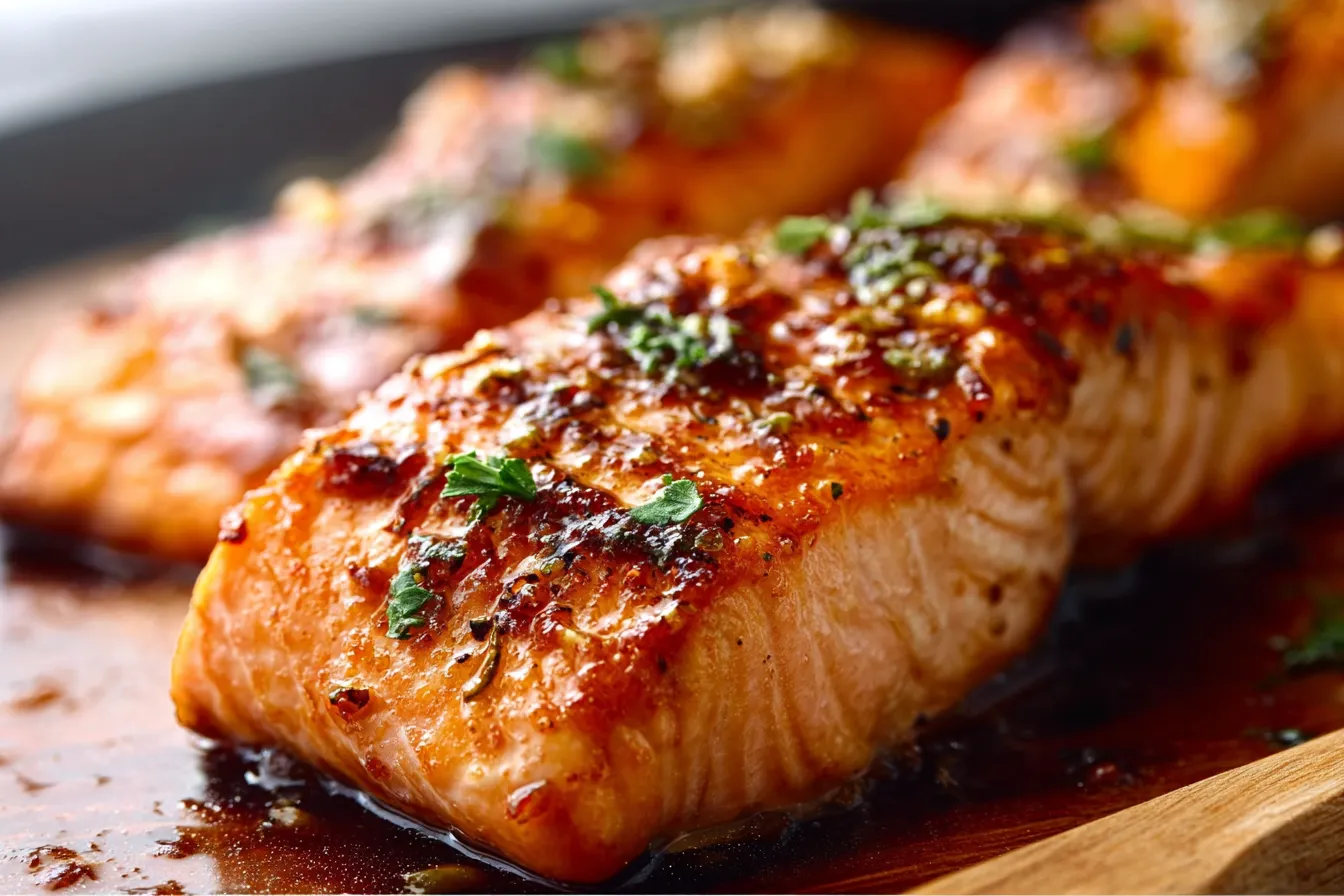
- The broil — where the recipe becomes a restaurant dish. Switch to broil on high. Brush the remaining glaze over the salmon — a generous second coat. Position the rack 4–6 inches from the broiler element. Watch it every single second. The glaze goes from shiny to deeply caramelized amber in 90–120 seconds under a hot broiler. You will see it bubble, darken, and begin to set. Pull when the glaze looks lacquered and the internal temperature reads 125–130°F. This is where most home cooks either under-broil (too pale) or over-broil (burned honey tastes bitter, not sweet). The window is about 45 seconds wide. Be present for it.
- Rest 2 minutes, then the finishing move that looks professional. A 2-minute rest allows the proteins to relax and the juices to redistribute slightly. Then: the knife move that makes home-cooked salmon look like it was plated professionally. Score the top of each fillet with two diagonal cuts, just breaking the glaze surface — this creates a visual pattern that shows the texture underneath and makes the garnish (sesame seeds, scallions, lemon zest) sit perfectly in the cuts rather than rolling off the rounded surface. It takes 4 seconds and changes how the dish is perceived before anyone takes a bite.

*As an Amazon Associate I earn from qualifying purchases — at no extra cost to you.
Salmon skin in most home kitchens ends up either stuck to the pan, rubbery, or peeled off and left on the plate. Restaurant salmon skin crackles like a chip, is crisp enough to eat with the fish, and adds a texture contrast that makes the whole bite more interesting. The secret is three things used together: completely dry skin before cooking, a very light film of oil on the pan surface rather than on the fish, and pressing the fillet firmly with a spatula during the first 30 seconds of baking (or pan-searing before oven finishing). This ensures full skin contact with the hot surface and eliminates the steam layer that forms under the skin when contact is uneven. The skin renders and crisps rather than steaming and going rubbery. It’s a 30-second difference in technique and the result is a completely different texture experience.
Salmon Temperature Guide — The Numbers That Change Your Results Forever
This table is worth printing and putting inside a kitchen cabinet. Once you understand salmon temperatures, you will never serve dry salmon again — and you will understand exactly what you are aiming for before you start cooking:
| Internal Temp | Texture | Appearance | Who It’s For |
|---|---|---|---|
| 110–115°F | Very silky, almost translucent | Deep pink throughout, raw-looking center | Sashimi-style lovers only |
| 120–125°F | Silky, buttery, just holds together | Mostly opaque, small translucent center | ✅ Restaurant standard — what we’re aiming for |
| 125–130°F | Firm but very moist, pulls in clean flakes | Fully opaque, slightly darker pink inside | ✅ Home cook sweet spot — reliable and impressive |
| 130–140°F | Firm, less moist, still good | Fully opaque, lighter interior color | Preferred by many home cooks — still very good |
| 145°F+ | Dry, pulls apart in coarse flakes | Light pink/beige throughout | FDA recommended for safety — technically done |

*As an Amazon Associate I earn from qualifying purchases — at no extra cost to you.
6 Glaze Variations on the Same Technique — One Method, Six Different Dinners
Master the reduce-bake-broil method and every one of these is a different dinner on the same Tuesday evening schedule:
🍁 Maple Bourbon Glaze
Replace honey with pure maple syrup. Add 1 tablespoon of bourbon to the glaze reduction (the alcohol burns off during cooking, the oak and vanilla notes stay). Reduce by half before using. This is the version you make for guests you want to impress without showing any effort.
🌶️ Honey Sriracha
Add 1–2 tablespoons of sriracha to the base glaze. The heat and the honey balance each other in a way that makes every bite interesting. Reduce the soy sauce to 1 tablespoon to avoid sodium overload. Finish with a squeeze of lime instead of lemon.
🍊 Honey Orange Ginger
Add the zest of 1 orange and 1 teaspoon of freshly grated ginger to the glaze reduction. The citrus oils and ginger create a bright, aromatic quality that pairs exceptionally well with salmon’s natural fat. Use rice wine vinegar in place of lemon juice.
🫚 Miso Honey
Whisk 1 tablespoon of white miso into the glaze before reducing. Miso adds umami depth, saltiness, and a fermented complexity that makes the glaze taste like it was developed over a long time. Reduce the soy sauce to 1 tablespoon. This is the chef’s version of this dish.
🥥 Honey Coconut Aminos
Replace soy sauce with coconut aminos for a paleo-friendly, lower-sodium version. Slightly sweeter, slightly less umami-forward, but the glaze still reduces and caramelizes beautifully. Add a small amount of fish sauce (½ tsp) if you want to maintain the depth without the soy.
🌿 Herb-Crusted Honey
Apply the first coat of glaze, then press fresh herbs (thyme, rosemary, chopped dill) into the surface before baking. The second glaze coat goes over the herbs. The herbs toast under the broiler and become a fragrant, slightly crispy crust that adds a completely new texture dimension.
What to Serve With Honey Glazed Baked Salmon
The glaze has enough personality that the sides benefit from either matching the Asian-inspired flavor direction or providing a neutral contrast that lets the salmon lead. Both strategies work — it depends on how much you want the rest of the plate to participate.
In the Asian-inspired direction: Jasmine rice with toasted sesame and scallions — the classic pairing that works because it works. Stir-fried bok choy with garlic and a drizzle of sesame oil. Edamame with flaky sea salt. Cucumber salad with rice wine vinegar and chili flakes — refreshing, acidic, and a perfect counterpoint to the sweet glaze.
In the neutral direction: Roasted asparagus with olive oil and lemon — simple enough not to compete. Creamy mashed potatoes, which pick up the glaze drippings from the plate in a way that should probably be its own recipe. A simple arugula salad with shaved parmesan and lemon vinaigrette — the bitterness of arugula cuts through the honey sweetness precisely.
For a complete sheet pan dinner: Add asparagus spears, broccolini, or sliced zucchini around the salmon before the oven. Toss the vegetables in olive oil, salt, and a small drizzle of the reduced glaze. Everything finishes in the same 25 minutes. The vegetables caramelize slightly in the honey drippings that inevitably end up on the pan. You wash one sheet. The kitchen smells extraordinary. The ratio of effort to result is the best in the weeknight dinner category.
Storage, Reheating and Meal Prep
Fridge: Store cooked salmon in an airtight container for up to 3 days. The glaze sets further in the fridge and develops a slightly more concentrated, jammy quality. Day-2 cold honey glazed salmon eaten straight from the fridge over rice is one of the better impromptu lunches in existence. This is not a consolation prize for leftovers. It’s a feature.
Reheating without drying: The absolute worst thing you can do to leftover salmon is microwave it. The second worst is putting it in a hot oven. The correct approach: bring to room temperature for 10 minutes, then place in a skillet over medium-low heat for 2–3 minutes per side with a splash of water and a lid. The steam regenerates the moisture. The glaze re-caramelizes slightly on the skillet surface. You get something that legitimately tastes freshly made.
Flaking for other uses: Cooked honey glazed salmon flakes beautifully into grain bowls, rice bowls, pasta, and salads. The glaze carries through into whatever it’s mixed with and seasons the whole dish. A flaked honey glazed salmon and avocado rice bowl with sesame seeds is one of the best 5-minute lunches a home cook has access to. Make slightly more than you need at dinner. You’re welcome.
Freezing: Cooked salmon can be frozen up to 2 months wrapped tightly in plastic then foil. Texture changes slightly on freezing — the flesh becomes a bit more flaky and less silky. Fine for flaking into dishes, less ideal for serving as a whole fillet presentation. Freeze the leftover glaze separately in an ice cube tray — each cube is one portion for a future quick bake.
Nutrition Information (Per Serving)
Per 6oz fillet with glaze. Values approximate. Omega-3 content: ~2.5g per serving (Atlantic salmon).
Why salmon’s nutrition profile matters in 2026: Salmon is one of the most nutrient-dense proteins in the regular home cook’s rotation — high in omega-3 fatty acids (EPA and DHA), protein, B vitamins, and selenium. The honey glaze adds approximately 60–70 calories per serving in carbohydrates from the honey; the soy sauce adds around 300mg sodium. For a lower-sodium version, use reduced-sodium tamari and reduce to 1.5 tablespoons. For a lower-sugar version, reduce honey to 2 tablespoons and add a small amount of apple cider vinegar to maintain the acidic balance.

*As an Amazon Associate I earn from qualifying purchases — at no extra cost to you.
Frequently Asked Questions About Honey Glazed Baked Salmon
Room-temperature fish. Reduced lacquer glaze. Broil finish. Three chef decisions that take 3 extra minutes and produce a result that makes people ask what restaurant you ordered from.
Made this recipe? Leave a ⭐⭐⭐⭐⭐ rating and a comment below — it helps this recipe reach more home cooks who deserve a better Tuesday dinner. Tell me which glaze variation you tried.