 ⭐ Reader Favorite 2026
Korean Soy Sauce Eggs (Mayak Gyeran) — The 20-Minute Recipe That Will Ruin Every Plain Egg You’ve Ever Eaten
Mayak Gyeran — which literally translates to “drug eggs” in Korean — is possibly the most accurate name ever given to a recipe. Because once you eat one, you cannot, will not, and should not stop.
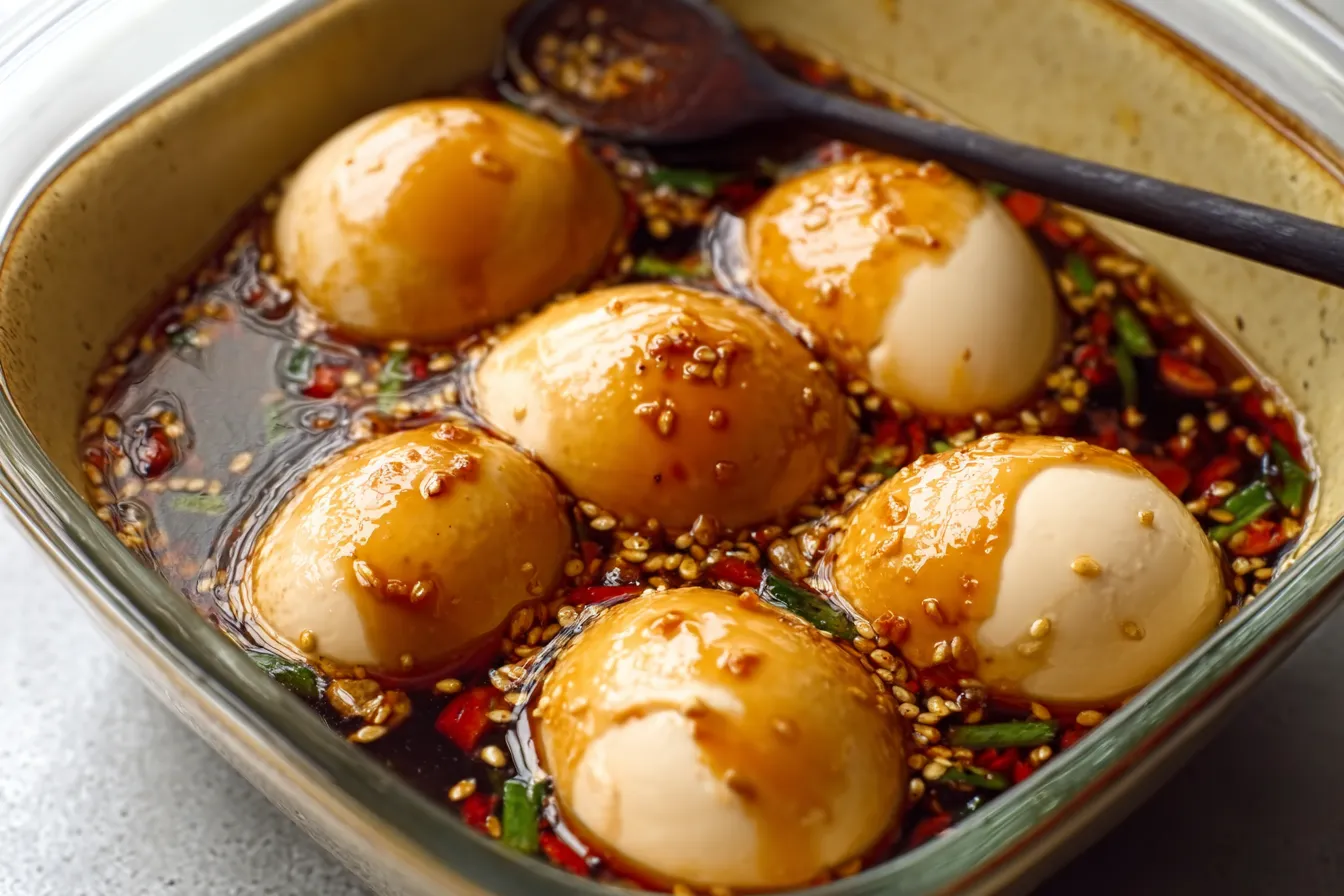
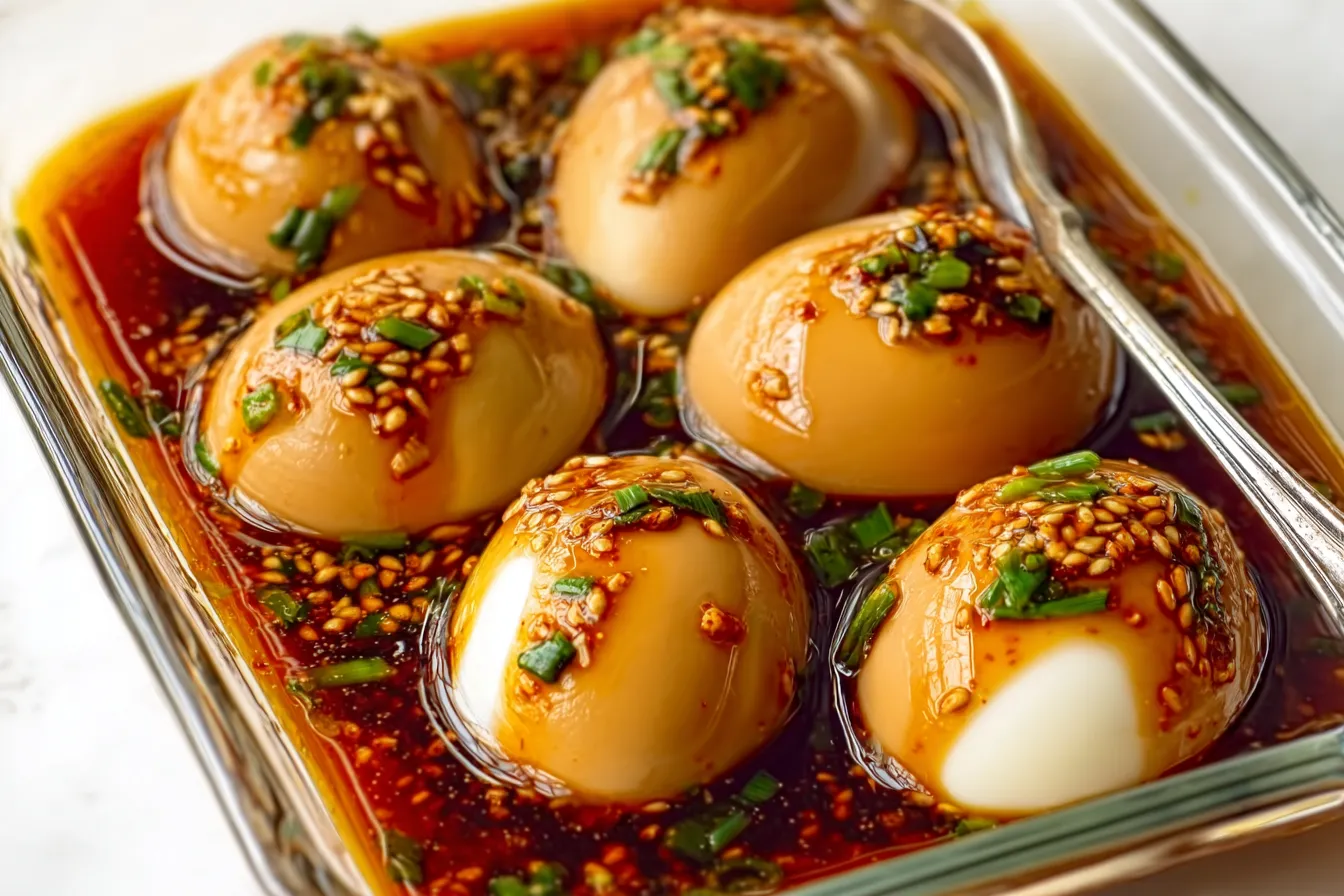
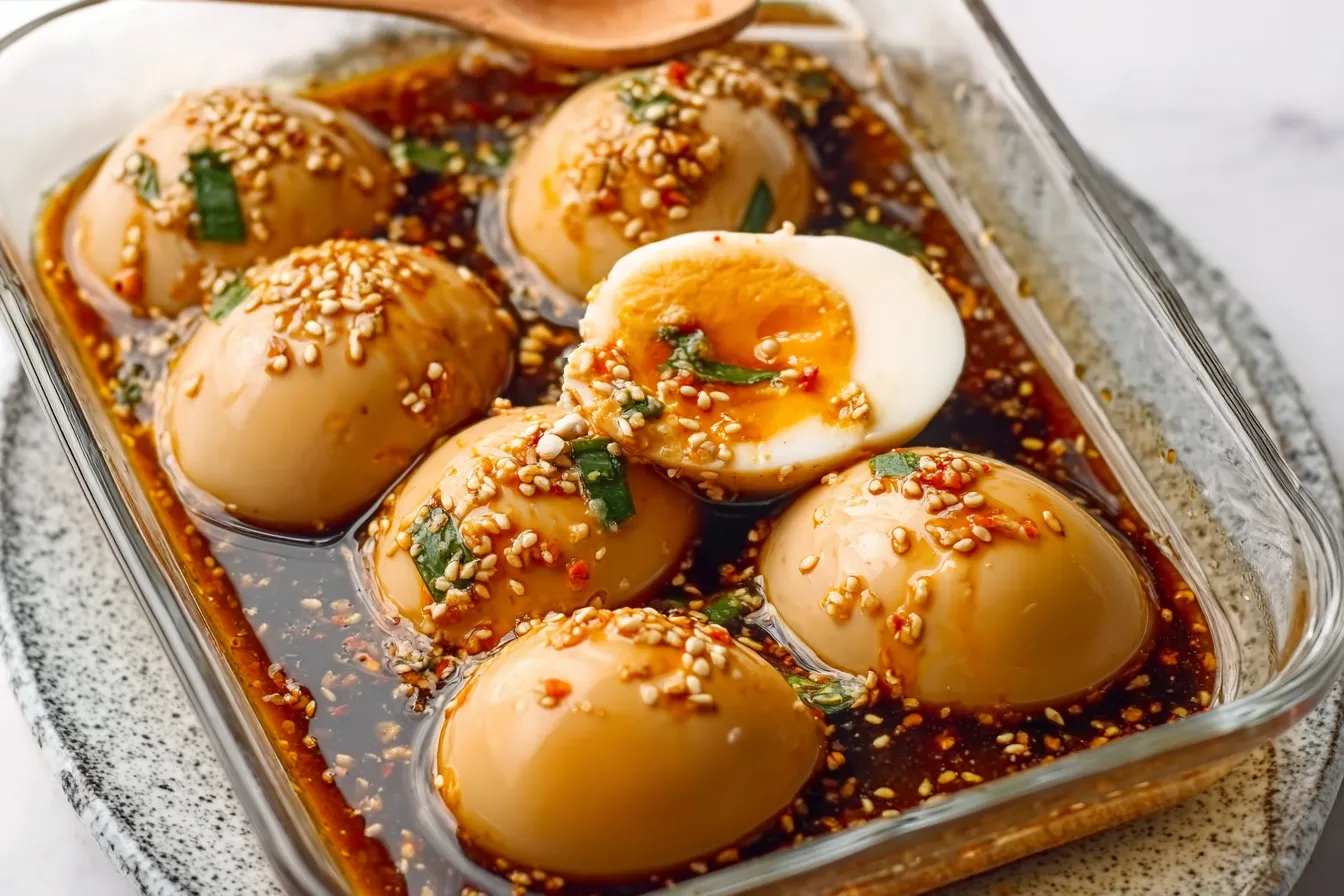
These silky, jammy, soy-marinated eggs have taken over TikTok, Instagram Reels, and every serious food forum from Seoul to Toronto. And honestly? The hype is 100% earned. We’re talking about a glossy, deep-bronze exterior hiding a barely-set, buttery yolk — all wrapped in a marinade so complex and savory it tastes like it simmered for hours. It took seven minutes to boil.
Whether you’re a complete beginner who’s never hard-boiled an egg without disaster, or a seasoned home cook looking for your next obsession — this recipe is for you. I’ll walk you through every step, share the secrets that most blogs skip, and make sure you never look at a plain egg the same way again.
📋 Jump To Section
What Exactly Are Korean Soy Sauce Eggs?
Mayak Gyeran (마약계란) is a Korean side dish — called a banchan — made by soft-boiling eggs and marinating them in a savory-sweet-spicy soy sauce mixture for several hours (or overnight, which is even better).
The name “mayak” means narcotic or drug in Korean, and it’s used colloquially for foods that are insanely addictive. Think of it as Korea’s way of saying: “Warning — you will not be able to stop eating this.” They weren’t wrong.
The magic is in the marinade: soy sauce brings deep umami, sesame oil adds nuttiness, sugar (or honey) creates a glossy sweetness, garlic adds punch, and chili peppers provide just enough heat to keep things interesting. The eggs absorb all of it as they rest, turning into deeply flavored, jewel-toned beauties that elevate literally anything they touch.
Ingredients You’ll Need (And Why Each One Matters)
The beauty of this recipe is that the ingredient list is short. But don’t let that fool you — each component is doing serious heavy lifting.
For the Eggs
- 6 large eggs — Fresh eggs are actually harder to peel. If you have eggs that are 1–2 weeks old, use those.
- 1 tsp white vinegar (optional) — Helps prevent cracking during boiling.
- Ice water bath — Non-negotiable. This stops the cooking immediately and creates that perfect jammy yolk.
For the Marinade
- ½ cup soy sauce — Use low-sodium if you’re salt-sensitive. Japanese soy sauce (like Kikkoman) works beautifully here.
- ½ cup water — Dilutes the saltiness without killing the flavor.
- 2 tbsp sugar or honey — Sugar gives a cleaner sweetness; honey adds floral depth.
- 1 tbsp sesame oil — This is the soul of the marinade. Don’t skip it.
- 3–4 garlic cloves, minced — Fresh is non-negotiable here.
- 2 green onions, thinly sliced — Flavor and freshness.
- 1–2 fresh red or green chilies, sliced — Optional but highly recommended. Gochugaru (Korean chili flakes) work too.
- 1 tsp toasted sesame seeds — Finish with these for texture and nuttiness.
*As an Amazon Associate, we earn from qualifying purchases. Prices may vary.
How to Make Korean Soy Sauce Eggs — Step by Step
I’ve tested this recipe over a dozen times to nail the perfect method. Follow these steps and you’ll get flawless results on your first try.
Step 1: Boil the Eggs Perfectly
Bring a medium pot of water to a rolling boil over high heat. Gently lower your eggs into the water using a slotted spoon (cold eggs straight from the fridge are fine — just add 30 seconds to the cook time). Set a timer for 6 minutes 30 seconds for jammy yolks. Go 7 minutes for a slightly firmer set.
• 6 min = very runny, lava-like (gorgeous but fragile)
• 6:30 min = jammy perfection — the Instagram-worthy one
• 7 min = soft set, still creamy
• 8 min = fully cooked (still great for marinating!)
Step 2: Ice Bath — Do Not Skip This
The moment your timer goes off, transfer the eggs immediately into a bowl of ice water. Leave them for at least 5 minutes. This halts the cooking and — bonus — makes peeling infinitely easier. That green ring around hard-boiled egg yolks? That’s what happens when you skip the ice bath. You’re welcome.
Step 3: Make the Marinade
Whisk together the soy sauce, water, sugar, sesame oil, minced garlic, sliced green onions, chilies, and sesame seeds in a bowl. Taste it — it should be savory, slightly sweet, fragrant, and just a little spicy. Adjust as needed. If it’s too salty, add a splash more water. Too mild? Add another clove of garlic or a pinch of gochugaru.
Step 4: Peel and Marinate
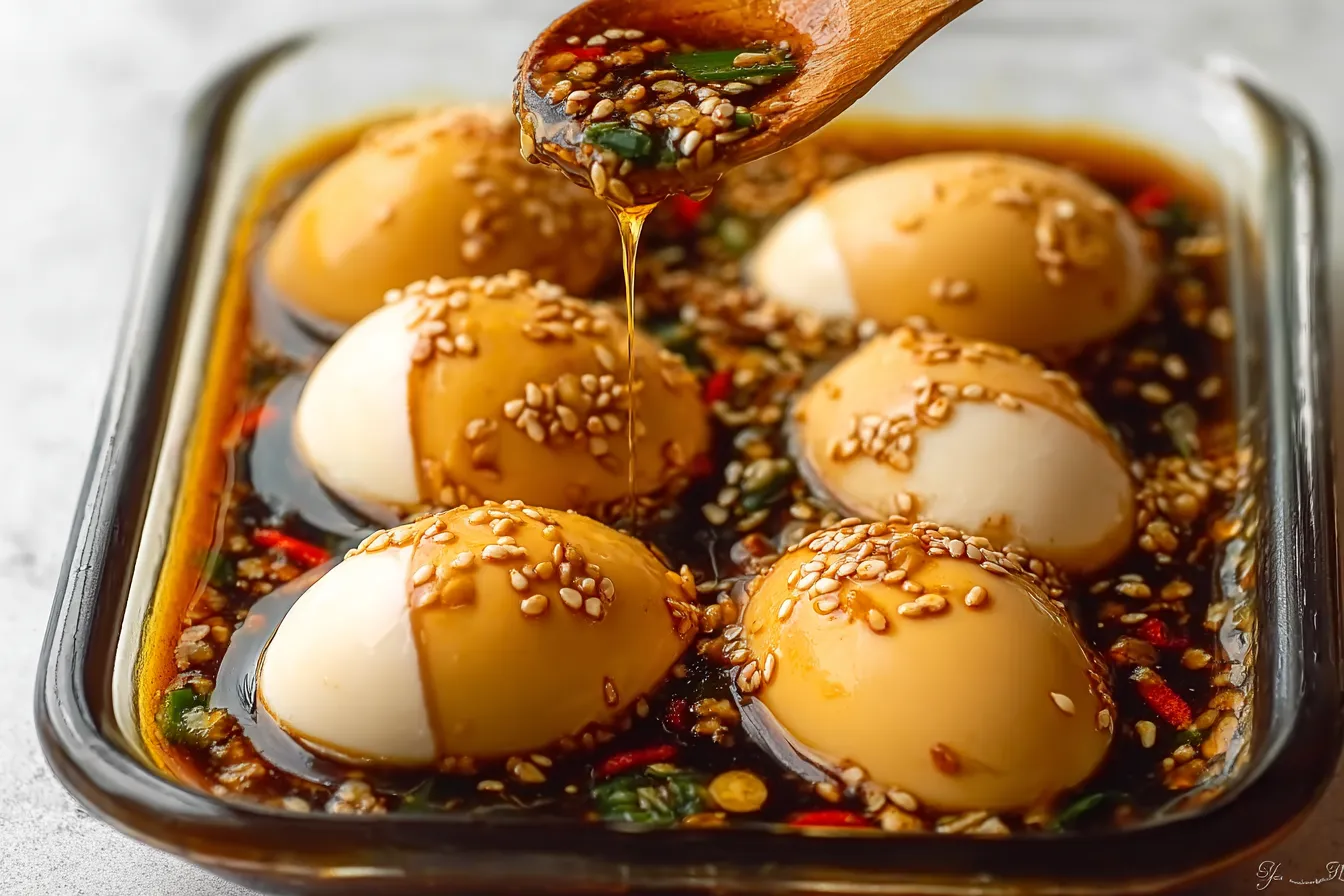
Carefully peel your cooled eggs under gently running water. Place them in a zip-lock bag or an airtight container and pour the marinade over. Make sure the eggs are fully submerged — if using a container, you may want to place a piece of plastic wrap directly on the eggs to keep them in contact with the marinade.
Refrigerate for a minimum of 4 hours. Overnight (8–12 hours) is the sweet spot. The eggs turn a gorgeous deep caramel-brown and absorb the full flavor profile of the marinade.
Chef’s Secrets — The Details That Separate Good From Unforgettable
🔑 Secret #1: The Double Soak Method
After the first 4-hour marinade, briefly take the eggs out, shake the container, and rotate the eggs so the parts that were touching the bottom get direct marinade exposure. Return to the fridge for another 2–4 hours. The color and flavor depth is dramatically better.
🔑 Secret #2: Reuse Your Marinade (Wisely)
The leftover marinade is liquid gold. Boil it for 2 minutes to eliminate bacteria, cool it down, and use it as a dipping sauce for rice, noodles, or tofu. Or marinate a second batch of eggs in it — the second batch is often even better because the marinade has matured.
🔑 Secret #3: Temperature of the Water Matters
Always start with already boiling water, never cold water. Starting in cold water and bringing to a boil makes it nearly impossible to time the jammy yolk correctly, because the egg heats unevenly. Boiling water = precise, consistent timing every single time.
*As an Amazon Associate, we earn from qualifying purchases.
How to Serve Korean Soy Sauce Eggs
This is where you can get really creative. Korean soy sauce eggs are fantastically versatile — they’re not just a side dish, they’re an upgrade to basically everything.
Classic Korean Pairings
- Steamed white rice — The OG pairing. Cut an egg in half over a bowl of hot rice and let that jammy yolk run. That’s it. That’s perfection.
- Ramen or instant noodles — Drop a halved egg into your bowl for an instant restaurant-level upgrade.
- Korean rice bowls (bibimbap) — A must-add protein.
Beyond the Bowl — Unexpected (But Brilliant) Pairings
- Avocado toast — Slice an egg on top instead of a fried egg. The salty-sweet soy glaze plays beautifully against creamy avocado.
- Grain salads — Add halved eggs to quinoa or farro bowls.
- As a snack, cold, straight from the fridge — Don’t knock it till you’ve tried it at 11pm.
Storage & Meal Prep — How Long Do They Last?
Korean soy sauce eggs are one of the best meal prep ingredients you can keep in your fridge. Here’s the practical guide:
- In the marinade: Keep refrigerated for up to 5 days. Flavor deepens every day. Days 2–3 are arguably the best.
- Removed from marinade: Store in a separate covered container and consume within 2 days. Flavor fades faster once removed.
- Freezing: Not recommended. The egg whites turn rubbery and the yolk texture suffers irreversibly.
- Marinade (without eggs): Can be stored in the fridge up to 1 week, or frozen for up to 2 months.
*As an Amazon Associate, we earn from qualifying purchases.
Variations Worth Trying
🌶️ Extra Spicy Version
Add 1–2 tablespoons of gochujang (Korean chili paste) to the marinade and double the fresh chilies. The heat develops beautifully over the marinating period.
🍯 Honey Garlic Version
Replace sugar with 3 tablespoons of honey and add an extra garlic clove. The honey creates an incredibly glossy coating and slightly caramelized exterior when the eggs are sliced.
🥬 Miso-Soy Version
Whisk 1 tablespoon of white miso paste into the marinade. It adds a fermented depth that tastes like it took days to develop. This is the grown-up, sophisticated version — dinner party worthy.
📋 Recipe Card
Ingredients
- 6 large eggs
- Ice water (for ice bath)
- ½ cup (120ml) low-sodium soy sauce
- ½ cup (120ml) water
- 2 tbsp sugar (or honey)
- 1 tbsp toasted sesame oil
- 1 tbsp rice vinegar
- 3–4 garlic cloves, finely minced
- 2 green onions, thinly sliced
- 1–2 fresh red chilies, sliced (or ½ tsp gochugaru)
- 1 tsp toasted sesame seeds
Instructions
- Boil the water: Bring a pot of water to a rolling boil over high heat.
- Cook the eggs: Gently lower eggs into the boiling water. Cook for exactly 6 minutes 30 seconds for jammy yolks (7 minutes for slightly firmer).
- Ice bath: Immediately transfer eggs to a bowl of ice water. Let rest 5–8 minutes.
- Make the marinade: Whisk together soy sauce, water, sugar, sesame oil, rice vinegar, garlic, green onions, chilies, and sesame seeds until sugar dissolves. Taste and adjust seasoning.
- Peel the eggs: Gently peel the cooled eggs under lightly running water.
- Marinate: Place peeled eggs in an airtight container or zip-lock bag. Pour marinade over, ensuring eggs are fully submerged. Refrigerate for a minimum of 4 hours, ideally overnight.
- Serve: Slice in half, serve over rice, noodles, or enjoy on their own. Spoon extra marinade over as sauce. Garnish with additional sesame seeds and green onion.
Nutrition (per egg)
Pair these eggs with honey-glazed salmon for a show-stopping Korean-inspired dinner spread.
Why Korean Food Is Having Its Global Moment (And What That Means For Your Kitchen)
The global rise of Korean cuisine isn’t a trend — it’s a full-blown cultural revolution. The “Korean Wave” (Hallyu) has brought K-dramas, K-pop, and — crucially — K-food to kitchens everywhere from Manhattan to Manchester to Melbourne. Banchan like Mayak Gyeran are suddenly everywhere, and food scientists are taking note.
According to a Mintel Global Food & Drink Trends report, Korean flavors (particularly gochujang, doenjang, and soy-based profiles) are among the fastest-growing cuisine influences in the US and Canada. Home cooks aren’t just experimenting — they’re integrating Korean pantry staples into their weekly rotation.
Translation: stocking soy sauce, sesame oil, and gochugaru in your pantry isn’t “exotic” anymore — it’s just smart cooking.
Frequently Asked Questions
Absolutely — hard-boiled eggs (cooked 10–12 minutes) marinate beautifully too. You’ll lose the jammy yolk drama, but they’re still deeply flavorful and great for meal prep. Hard-boiled marinated eggs also hold up longer in the fridge.
Up to 5 days in the marinade, refrigerated. Flavor deepens and improves each day. Don’t store longer than 5 days as the egg whites can become overly salty and the texture degrades.
Technically yes, but sesame oil is a core flavor component. If you’re allergic or don’t have it, you can substitute a neutral oil like avocado oil, but the flavor will be noticeably different. Toasted sesame seeds in the marinade can partially compensate.
They can be, but it’s entirely up to you. The base recipe without chilies is savory-sweet with no heat. Adding fresh chilies or gochugaru introduces mild-to-moderate heat depending on quantity. Make them as spicy or mild as your household prefers.
Both are marinated soft-boiled eggs, but the flavor profiles differ. Japanese ramen eggs typically use a mirin-forward, slightly sweeter, more subtle marinade often with dashi. Korean Mayak Gyeran uses a bolder soy base with sesame oil, garlic, and chilies — more punchy and complex. Both are magnificent.
*As an Amazon Associate, we earn from qualifying purchases. Prices subject to change.
Final Thoughts — Make These This Weekend
Korean soy sauce eggs are one of those rare recipes that punch so far above their effort level it almost feels like cheating. Twenty minutes of active work, a handful of pantry staples, and a fridge that does the rest — and you end up with something that genuinely impresses everyone who tries it.
They’ve been in my weekly rotation for two years now. I’ve served them to skeptical in-laws (converted immediately), picky kids (demolished), and food-snob friends (they asked for the recipe before dessert). The formula works. Every. Single. Time.
So here’s my challenge to you: make a batch this weekend. Put them on literally anything — rice, ramen, avocado toast, or just eat them standing over the sink at midnight. I don’t judge. In fact, I enthusiastically encourage it.
And when you do? I want to hear about it. Leave a comment below, rate the recipe, and share your photos — because a perfectly halved Mayak Gyeran deserves to be seen.
We test every recipe multiple times before publishing — because your time and your pantry are valuable. Our goal: bring restaurant-quality Korean and Asian-fusion cooking into everyday home kitchens, no culinary degree required.