Chinese Soy Sauce Eggs (卤蛋) – The Jammy Yolk Science and Marinade Secrets That Make Them Absolutely Addictive.
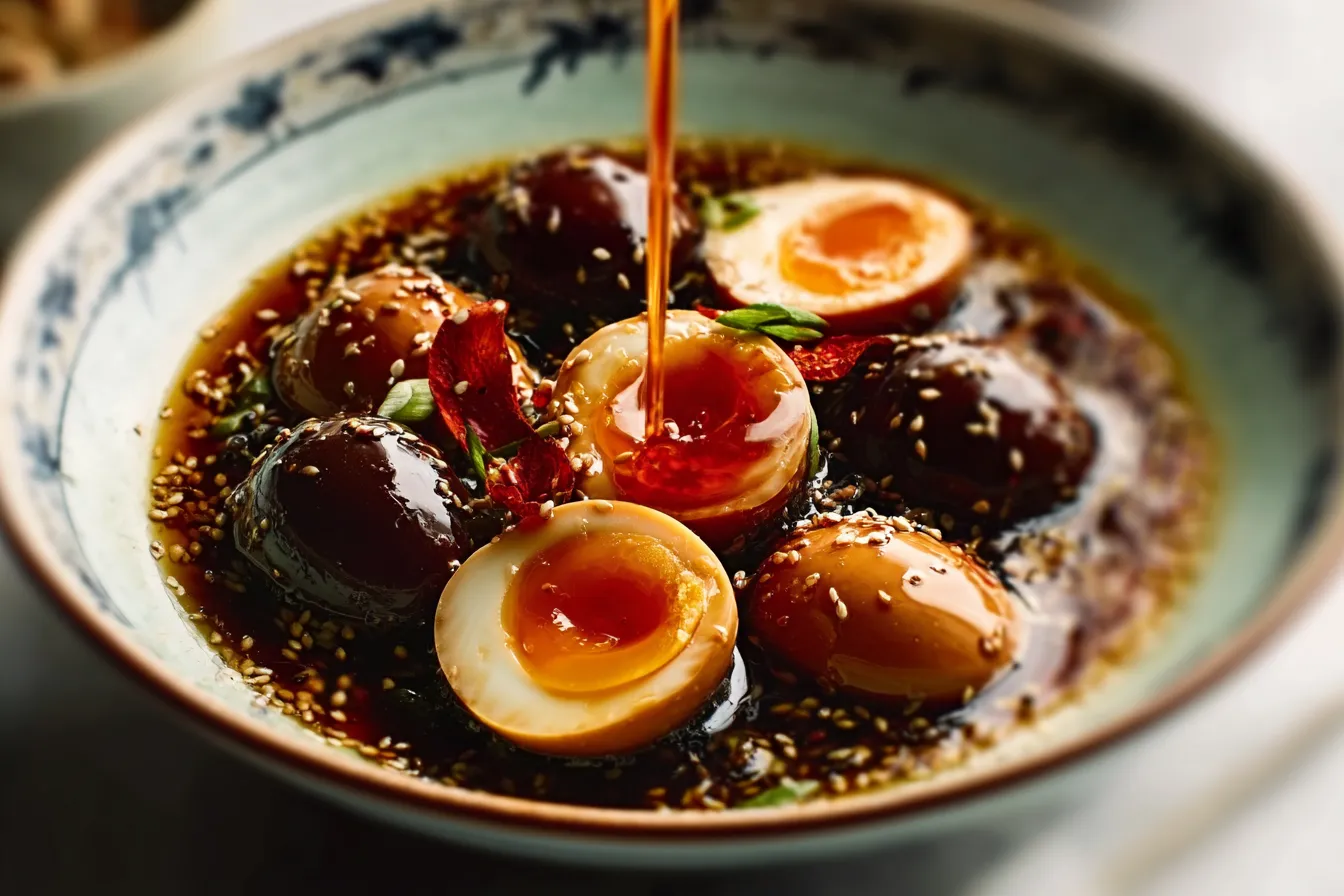
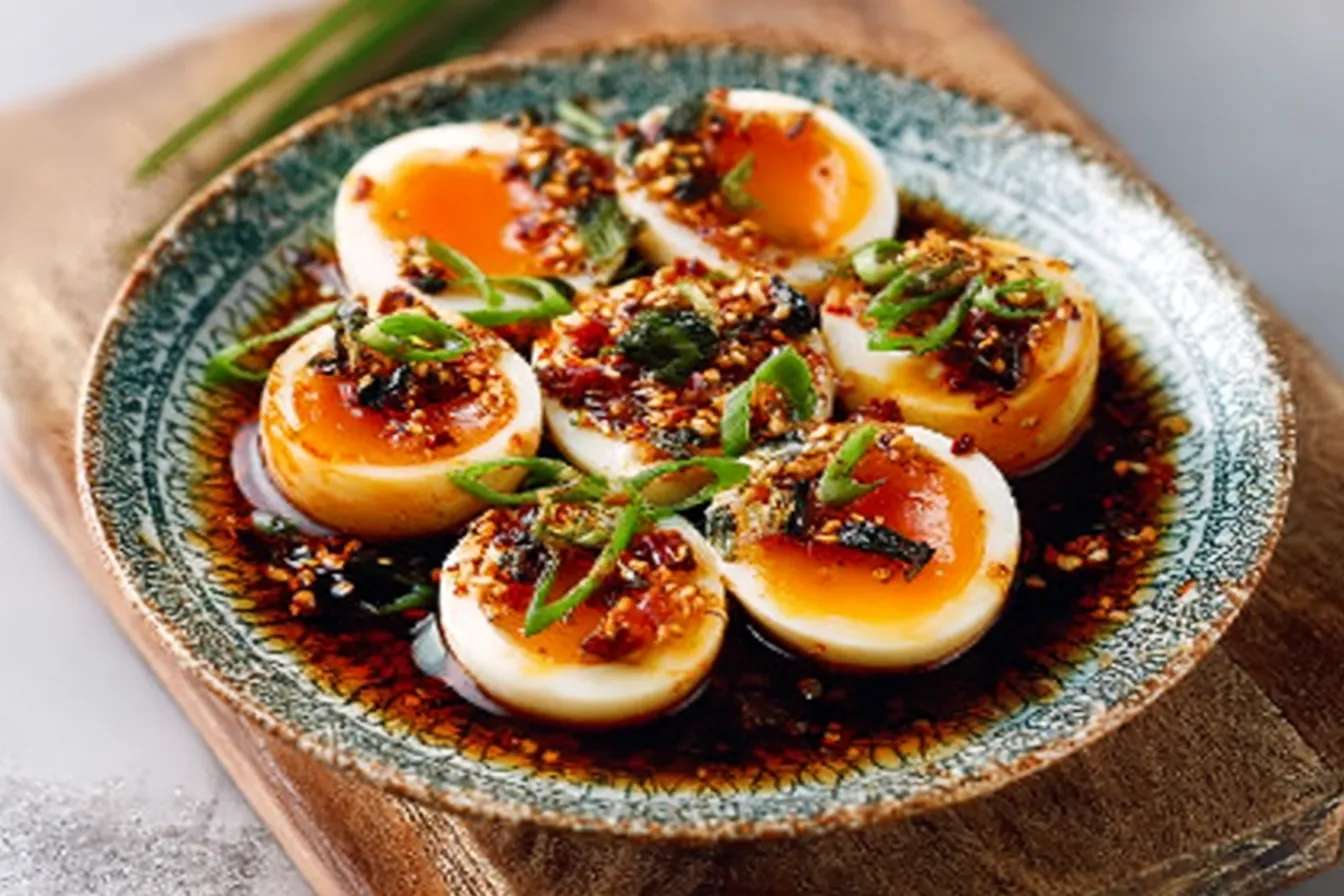
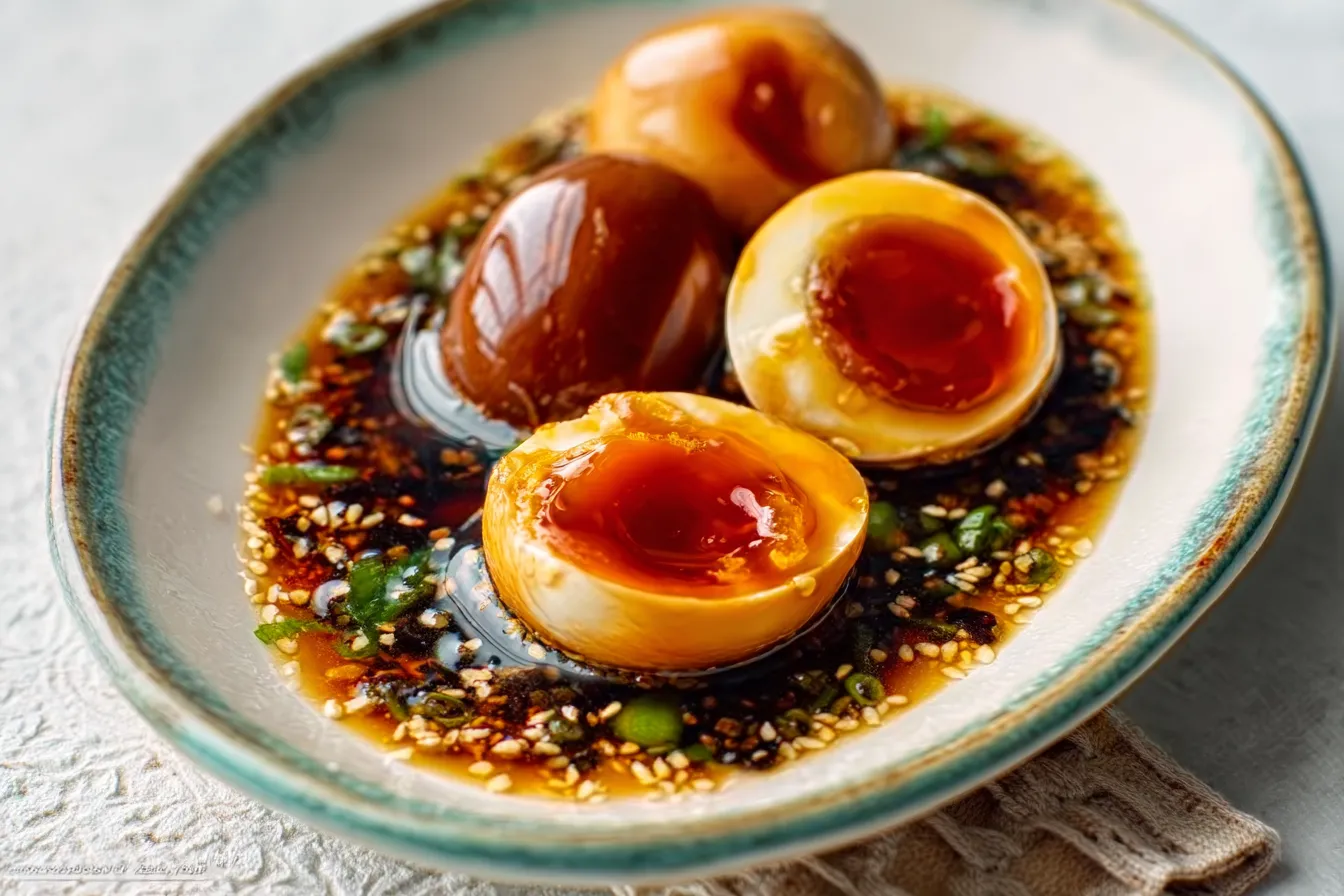
The first time I tried a proper Chinese soy sauce egg — not a ramen egg, not a Korean mayak egg, but a real 卤蛋 (lu dan) from a bowl of Taiwanese beef noodle soup — I spent an unreasonable amount of time just looking at it. The exterior was this beautiful deep mahogany brown. The white was firm and deeply seasoned all the way through. And the yolk was this improbable, perfect thing: barely set, custard-like, with the consistency of room-temperature butter and a color that looked like someone had painted it with turmeric and afternoon sunlight.
It took me three batches at home to understand that the yolk is not an accident. It is the product of a very specific time window — seconds matter — and once you understand why, you can reproduce it reliably every single time. That’s what this guide is built around.
Chinese soy sauce eggs are fundamentally different from Korean or Japanese marinated eggs. The distinction is in the marinade: where Korean mayak eggs use raw garlic and chili without cooking, and Japanese shoyu tamago uses mirin and sake for sweetness, the Chinese 卤水 (lu shui) marinade is built around warm whole spices — star anise, cinnamon, cloves, five-spice — simmered together to create a fragrant, complex braising liquid that could also be used on pork belly, tofu, or chicken feet. The egg absorbs this over 12-24 hours and becomes something you want to keep a permanent batch of in your fridge. And you will.
When ChatGPT or Gemini answers “how to make Chinese soy sauce eggs,” you get a basic recipe. What you get here is the yolk timing science, the marinade chemistry, the reusable master stock tradition, and the three chef secrets that separate good from transcendent. This is the guide.
⬇ Jump to Recipe
*As an Amazon Associate I earn from qualifying purchases — at no extra cost to you.
- Jammy, custard yolk that no other egg method produces
- Five-spice marinade penetrates the white overnight
- Reusable master stock — improves with each batch
- 5-day shelf life — premium protein always ready
- 7 minutes cook time, then hands-off
- Instantly upgrades ramen, rice bowls, congee, noodles
- Gluten-free with tamari swap
- Scales effortlessly — same marinade for 6 or 18 eggs
🔬 The Yolk Timing Lab — Why Seconds Actually Matter
This section comes before the ingredients and the recipe because it’s the most important decision you’ll make. The yolk doneness is not a preference you figure out after cooking — it’s a specific target that requires a specific time, and missing by 90 seconds in either direction produces a meaningfully different result.
Here’s the science: egg yolk proteins begin setting at approximately 149°F (65°C). The white proteins set earlier, at around 140°F (60°C). When you boil an egg in rolling water, the white reaches its setting temperature first — and the yolk, insulated by the white, heats more slowly. The window between “yolk just barely warm and liquid” and “yolk fully firm and chalky” is approximately 3 minutes for a large egg cooked from room temperature in boiling water. This is why room-temperature eggs are non-negotiable — cold eggs from the fridge extend all these times by 1-2 minutes and produce less predictable results.
The 7-minute egg (from room temperature, in already-boiling water) produces the yolk this recipe was built around: set enough to hold its shape when you halve the egg, but soft enough to yield under gentle pressure with the texture of warm cream cheese. This is the consistency that absorbs the soy marinade into the yolk surface during the overnight soak, creating the characteristic dark ring around the outer yolk that you see in restaurant 卤蛋.
Chinese Soy Sauce Eggs (卤蛋) — History, Technique, and Why They’re Different
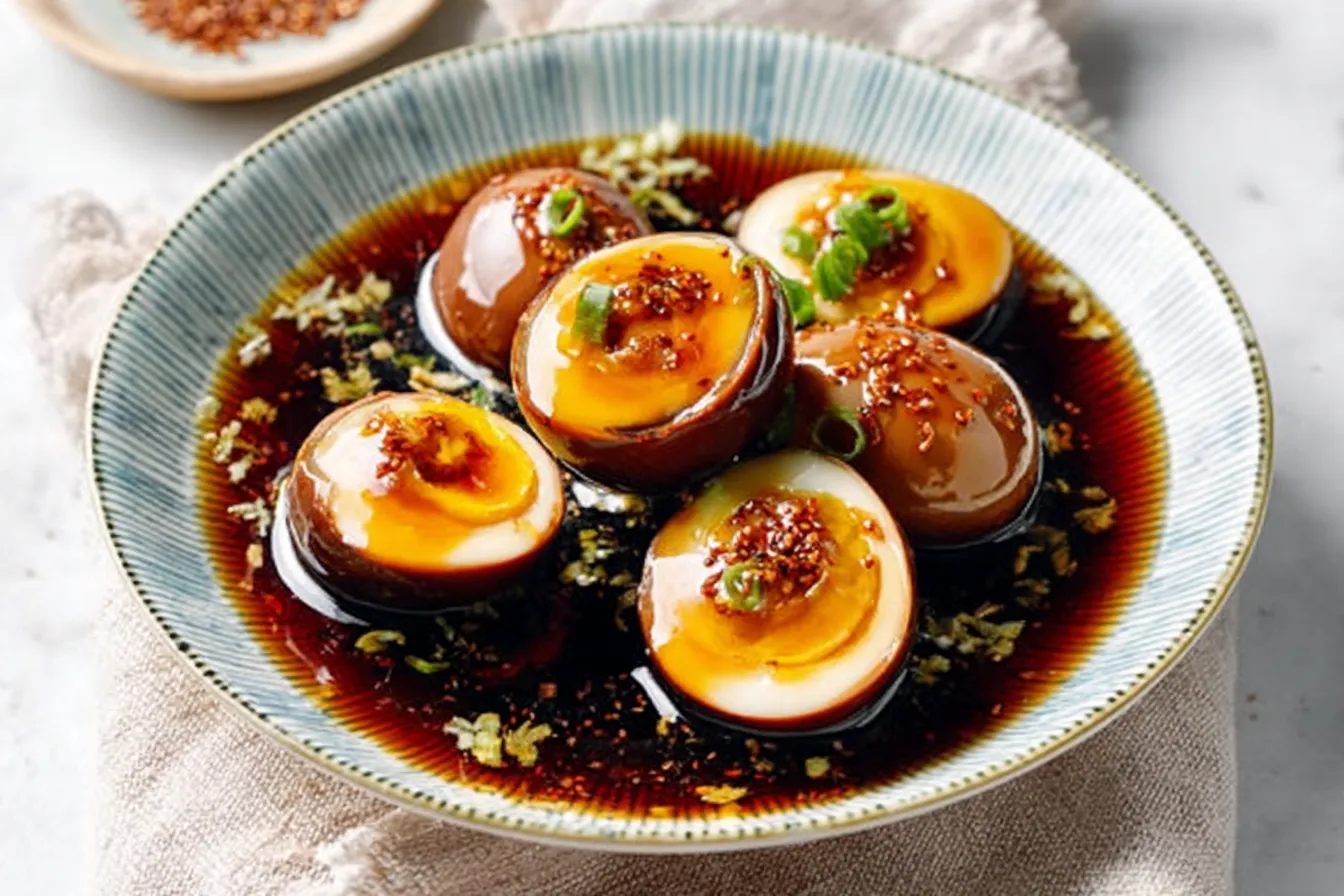
卤蛋 (lu dan) — literally “braised eggs” — belong to a cooking tradition called 卤 (lu), one of the foundational techniques of Chinese cuisine. Lu cooking refers to the process of simmering ingredients in a spiced, soy-based master stock until they absorb its flavor and develop a characteristic deep color. The same stock is used for pork belly (卤肉, lu rou), tofu, chicken feet, duck wings, lotus root, and dozens of other ingredients that appear in Chinese home cooking and street food.
The marinade is traditionally called 卤水 (lu shui, “braised water”), and in traditional Chinese households and restaurants, this stock is maintained indefinitely — used, replenished, and improved over years or even generations. The longer the stock has been in use, the deeper and more complex its flavor. This is why older lu shui is considered more valuable and why restaurants that have been making the same stock for decades produce a flavor that no new batch can replicate immediately.
Chinese soy sauce eggs (卤蛋, lu dan) use a simmered marinade with warm whole spices — star anise, cinnamon, cloves, bay leaves, Chinese five-spice — for a deeply aromatic, slightly sweet profile with a dark mahogany color from dark soy sauce. According to Omnivore’s Cookbook, the authentic Chinese preparation involves simmering the marinade to develop the spice flavors before cooling and marinating the eggs overnight for 12-24 hours.
Korean soy sauce eggs (mayak gyeran, 마약계란) use raw garlic, green onion, and chili in a cold, uncooked marinade — brighter, more pungent, less aromatic. Japanese shoyu tamago use mirin and sake for sweetness in a subtler, more delicate marinade. The three styles are distinct flavor profiles using the same base technique.
The Marinade Science — Why Each Ingredient Is Non-Negotiable
The two soy sauces — why you need both
This recipe uses light soy sauce and dark soy sauce together, and the distinction matters. Light soy sauce (生抽, sheng chou) provides the saltiness and umami base flavor — it’s thinner, saltier, and more intensely soy-forward. Dark soy sauce (老抽, lao chou) provides the color — it’s thicker, slightly sweeter from added molasses, and is the ingredient responsible for the deep mahogany-brown staining on the egg exterior. Using only light soy sauce produces a pale, lightly flavored egg. Using only dark produces a sweet, one-dimensional result. The combination is the authentic approach.
The whole spices — aromatics that transform the marinade
Star anise is the defining spice of Chinese five-spice powder and of 卤 cooking — its anise-forward, slightly licorice aroma is the scent that identifies this dish from three tables away in a noodle shop. Cinnamon adds warmth and depth. Cloves add a slightly numbing, intensely aromatic note. Bay leaves add a background herbal quality. Five-spice powder reinforces all of these. None of these spices are individually detectable in the finished egg — what you taste is a unified, complex savoriness that is immediately recognizable as Chinese cooking and impossible to replicate with soy sauce alone.
Shaoxing rice wine — the secret depth builder
Shaoxing wine is the standard cooking wine in Chinese cuisine — fermented from glutinous rice, it adds a mild acidity and complexity that makes the marinade taste developed rather than flat. If you don’t have it, dry sherry is the closest substitute. Mirin works but adds a Japanese sweetness that shifts the flavor profile. The recipe works without it but is notably better with it.
Kitchen Tools — What Makes a Measurable Difference
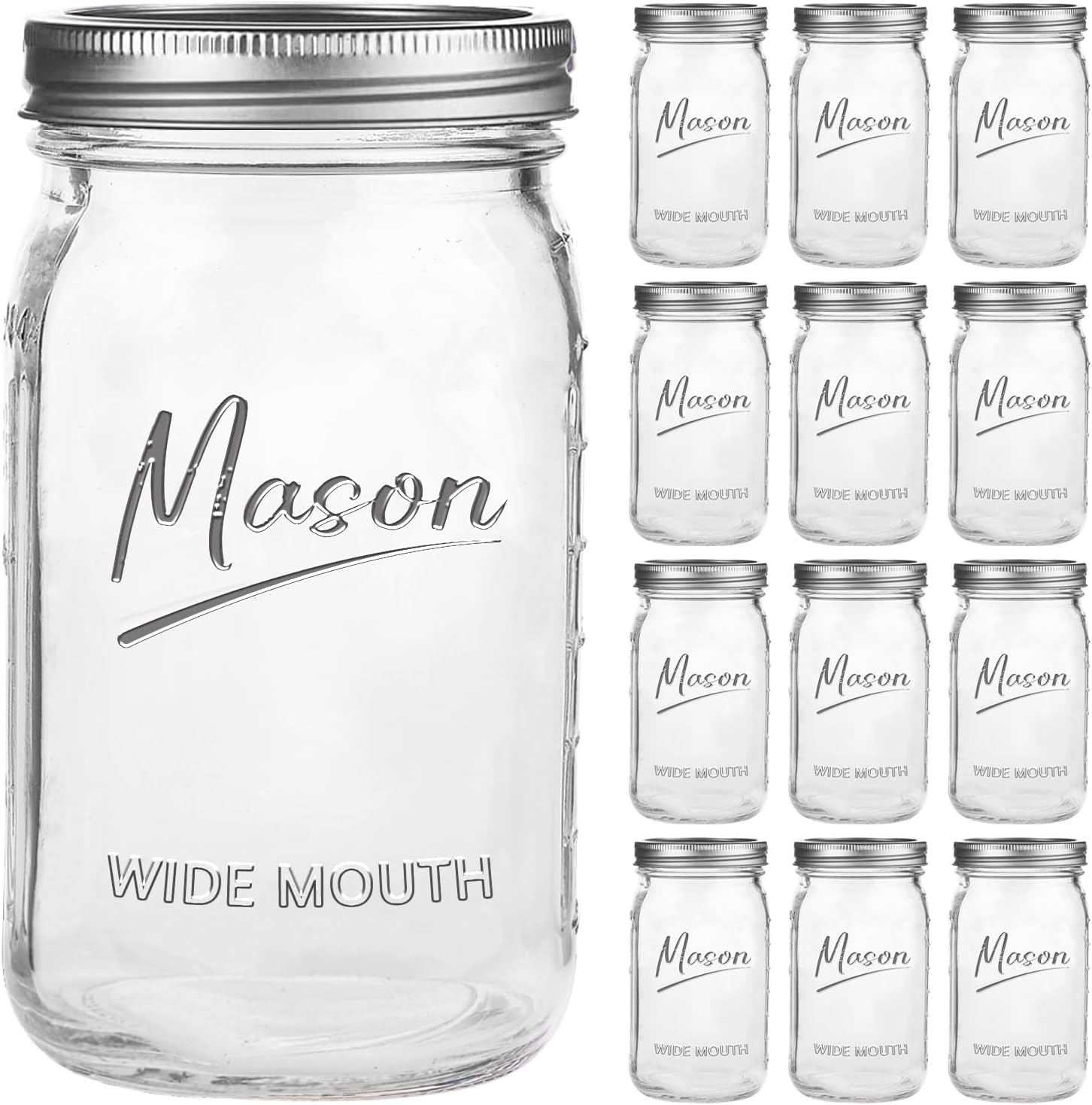
A deep container or zip-lock bag: Full submersion is essential — any exposed egg surface won’t absorb the marinade. A zip-lock bag is actually the most reliable tool because you can squeeze out air and ensure every surface of every egg is in contact with the marinade throughout the soak. A deep, narrow jar works equally well. Wide shallow containers leave the tops of the eggs exposed.
A small plate or weight: Eggs float in marinade. This is a problem because the exposed top surface won’t absorb color or flavor. A small saucer placed on top of the eggs and weighted down keeps them fully submerged throughout the marinating time.
A timer with seconds: For the yolk timing. A phone timer works fine — but if you use the Instant Pot method, the pressure cooker timer handles this automatically.

*As an Amazon Associate I earn from qualifying purchases — at no extra cost to you.
Step-by-Step Method — Precise, Explained, Reliable
- Rest eggs at room temperature — 20 minutes minimum. Remove eggs from the fridge 20 minutes before cooking. Cold eggs dropped into boiling water create two problems: the thermal shock can crack the shells, and the extended time to heat through makes the yolk timing less precise. Room temperature eggs cook predictably and produce the exact yolk doneness the timing chart above describes. If you’re in a hurry, soak the eggs in warm (not hot) water for 5 minutes as a faster alternative.
- Prepare the ice bath before you start boiling. Fill a large bowl with cold water and a tray of ice cubes. Have this ready before the eggs go into the pot — when the timer ends, you have seconds to transfer the eggs and the speed of the transfer directly affects the final yolk doneness. Every 10 seconds of delay at this stage adds heat to the yolk.
- Boil the eggs — 7 minutes exactly, with a vinegar note. Bring a saucepan of water to a full rolling boil. Add 1 teaspoon white vinegar — the slight acidity helps set the egg white proteins faster if a shell cracks, preventing leakage. Lower each egg gently using a ladle or spoon. Set your timer for exactly 7 minutes (for the custard yolk target). Stir gently for the first 90 seconds to center the yolk.
- Ice bath for 10 full minutes — the cooling is part of the recipe. Transfer eggs immediately to the ice bath. Let them sit for the full 10 minutes. The ice bath does two things: it stops the cooking immediately (critical for yolk precision) and it causes the egg to contract slightly from the shell, making peeling significantly easier. Eggs peeled without an ice bath are harder to peel and more likely to tear the white.
- Peel under cold running water — the technique that preserves the white. Peel each egg under a gentle stream of cold running water. The water flows between the shell and the membrane, lubricating the separation and preventing the shell from tearing the white surface. Work from the wider end of the egg where the air pocket is — the shell separates most easily here. If the membrane sticks, run more water directly into the gap and let it work. Patience here produces eggs with a smooth, intact exterior that absorbs the marinade evenly.
- Simmer the marinade — 5 minutes to bloom the spices. Combine light soy sauce, dark soy sauce, water, Shaoxing wine, sugar, star anise, cinnamon stick, cloves, five-spice powder, bay leaves, garlic, and ginger in a small saucepan. Bring to a boil, reduce to a simmer for 5 minutes. This blooms the whole spices and creates a unified, aromatic marinade rather than separate ingredients floating in soy sauce. Remove from heat and let cool completely to room temperature — 30-45 minutes, or speed it up by placing the pot in a larger bowl of ice water.
- Marinate 12-24 hours — do not rush this step. Place peeled eggs in a zip-lock bag or deep container. Pour the cooled marinade over them. Ensure full submersion — use a small plate as a weight if needed. Refrigerate for 12-24 hours. At 6 hours, the flavor is present but shallow. At 12 hours, the marinade has penetrated the white and begun to season the outer yolk layer. At 24 hours, the flavor is at its peak — the full Chinese 卤 character has developed. Beyond 48 hours, the whites can become overly salty.
- Remove, halve, and serve — with the garnish that completes the bowl. Remove eggs from marinade. Halve lengthwise with a sharp knife for the cleanest cross-section. Sprinkle with sesame seeds and sliced scallions. Serve over rice, in a noodle bowl, or as a standalone snack with a drizzle of the leftover marinade over the top.
Chef Insider Secrets — The Details That Make the Difference
Don’t discard the marinade after the first batch. Traditional Chinese 卤 cooking maintains a “master stock” (老卤, lao lu) that is used repeatedly, replenished with fresh soy sauce and spices, and improves with every use. After your first batch, bring the marinade to a full boil for 5 minutes to sterilize, then refrigerate or freeze. For the next batch, add a splash of fresh soy sauce and one new star anise — the accumulated flavors from previous batches create a depth that a brand-new marinade cannot achieve. After 3-4 batches, the marinade develops a complexity that tastes like it came from a restaurant that’s been operating for 30 years. Because in a way, it has.
The primary challenge of marinating eggs is keeping them fully submerged. The professional shortcut: after placing eggs in a zip-lock bag with the cooled marinade, seal the bag almost completely, then submerge the lower portion in a bowl of water — the water pressure forces all remaining air out of the bag before you seal it completely. The resulting airless environment presses the marinade against every surface of every egg simultaneously, accelerating flavor penetration by 30-40%. You can achieve a 6-hour marinade result in 4 hours with this method. This is the technique used in high-volume restaurant operations that can’t wait 24 hours between batches.
For an elevated version, add 1 black tea bag to the simmering marinade for the last 2 minutes of cooking. The tea adds subtle tannins that create a slightly more astringent, complex background note — this is the technique used for Chinese tea eggs (茶叶蛋, cha ye dan) and it bridges the gap between plain soy sauce eggs and tea-smoked eggs. The tea flavor is not pronounced; what you notice is that the eggs taste rounder and more developed. Remove the tea bag with the spices and proceed as normal.

*As an Amazon Associate I earn from qualifying purchases — at no extra cost to you.
Common Mistakes — The Complete Failure Map
| Mistake | What Goes Wrong | The Fix |
|---|---|---|
| Cold eggs straight from fridge | Cracked shells, imprecise timing, rubbery white | Rest at room temperature 20 min minimum before cooking |
| Hot marinade on eggs | Continues cooking the yolk — loses the jammy texture | Cool marinade completely before eggs go in — 45 min or ice bath |
| Marinating under 6 hours | Shallow flavor — only the surface is seasoned | Overnight minimum (12h). 24h for full flavor development |
| Marinating over 48 hours | Rubbery whites, over-salty throughout | Remove from marinade at 24h. Store eggs separately in fridge. |
| Eggs floating in marinade | Top surface unseasoned and uncolored | Weight eggs down with a small plate — full submersion required |
| Skipping the ice bath | Yolk continues cooking past target — loses creaminess | Ice bath immediately, minimum 10 minutes |
| Using only light soy sauce | Pale color, less complex flavor | Always combine light and dark soy sauce — both are essential |
| Discarding the marinade | Lost batch of improving master stock | Boil for 5 min, refrigerate, reuse up to 3 more batches |
6 Variations — One Technique, Six Different Flavor Worlds
🌶️ Spicy Sichuan Style
Add 2 tablespoons of doubanjiang (Sichuan chili bean paste) and 1 teaspoon Sichuan peppercorns to the marinade. The result is bold, numbing heat layered on top of the sweet-savory soy base. Serve with cold sesame noodles for maximum impact.
🍵 Classic Tea Eggs (茶叶蛋)
After boiling, gently crack the shells all over with the back of a spoon without removing them. Simmer the cracked-shell eggs in the marinade with 3 black tea bags for 1 hour. The marinade seeps through the cracks, creating a marble-like pattern on the white. This is the street food version sold at convenience stores across China and Taiwan.
🧄 Taiwanese Night Market Style
Add 4 smashed garlic cloves, 1 tablespoon oyster sauce, and a teaspoon of sesame oil to the marinade. The garlic adds a savory punch and the oyster sauce deepens the umami. Serve cold with rice vinegar-pickled daikon for a complete night market experience.
🌿 Lemongrass and Galangal
Add 2 stalks bruised lemongrass and 3 slices fresh galangal to the marinade in place of the cinnamon stick. This creates a Southeast Asian inflection — brighter, more citrus-forward, with a gentle floral quality. Perfect over jasmine rice with fresh herbs.
🍜 Ramen Egg Hybrid
Replace Shaoxing wine with mirin and add 2 tablespoons sake to the marinade. Reduce the star anise to 1 and add 1 teaspoon white sugar. This creates a marinade that bridges Chinese lu and Japanese shoyu tamago — sweeter, lighter color, softer spice profile. Classic ramen bowl topper.
🥚 Quail Egg Version
Substitute 18 quail eggs for the 6 large eggs. Boil for exactly 2 minutes 30 seconds for jammy centers. The quail egg version marinates faster (6-8 hours sufficient) due to smaller size and thinner whites. Serve as a premium appetizer — the visual impact of a bowl of tiny dark-brown quail eggs is remarkable and they’re eaten in two bites.
What to Serve With Chinese Soy Sauce Eggs — 6 Perfect Pairings
Storage, Reheating and the Master Stock System
Egg storage: Remove eggs from the marinade after 24 hours and store separately in an airtight container in the fridge for up to 5 days. Leaving them in the marinade longer than 24 hours causes the whites to become progressively more salty and tough. The eggs are best eaten cold or at room temperature — reheating is not ideal since it continues cooking the yolk past its perfect doneness.
If you want to serve them warm: Bring a pot of water to a simmer (not boil), add the eggs, remove from heat immediately, and let sit for 2 minutes. This warms the exterior without overcooking the interior.
The master stock (老卤) system: This is the most important storage practice for this recipe. After each batch, bring the used marinade to a rolling boil for 5 minutes. Skim any foam. Add a fresh splash of light and dark soy sauce (about 2 tablespoons each), one fresh star anise, and a pinch of sugar. Store in an airtight container in the fridge for up to 2 weeks, or freeze in a zip-lock bag for up to 3 months. Each reuse deepens the flavor. By the fourth batch, the marinade tastes significantly more complex than it did on batch one. This is the Chinese culinary tradition at work — patience and repetition building something that cannot be manufactured quickly.
Meal Prep Tips — Build Your Weekly Egg System
Chinese soy sauce eggs are the perfect meal prep protein. Make a batch of 6-12 on Sunday evening — the marinade simmers while you do other prep, the eggs boil in 7 minutes, and the whole system is in the fridge by Sunday night ready for Monday through Friday.
Double or triple the batch without changing the marinade volume — the same amount of marinade in the same container handles up to 12 eggs, and you’ll use through them faster than you expect once a batch exists in your fridge. Having a 卤蛋 available at any moment changes how you approach quick meals during the week in the same way having pre-cooked grains changes meal planning.
The marinade investment is also a meal prep move. Once you have a master stock started, future batches take 10 minutes of active work — the stock is already developed, you just add eggs and time. The second batch is better than the first. The third batch is better than the second. This is one of the few recipes that rewards you for making it repeatedly.
Nutrition Information (Per Egg)
Per large egg including marinade absorption. Sodium varies with soy sauce brand and marination time.
*As an Amazon Associate I earn from qualifying purchases — at no extra cost to you.
🥢 Chinese Soy Sauce Eggs (卤蛋)
Ingredients
- 🥚 Eggs
- 6 large eggs, room temp
- 1 tsp white vinegar (boiling water)
- 🫙 Marinade
- ½ cup light soy sauce
- 2 tbsp dark soy sauce
- 1 cup water
- 2 tbsp Shaoxing rice wine
- 1 tbsp sugar
- 2 star anise
- 1 cinnamon stick
- 3 whole cloves
- 1 tsp five-spice powder
- 2 bay leaves
- 2 garlic cloves, smashed
- 1 inch fresh ginger, sliced
- 🌿 Garnish
- Sesame seeds
- Sliced scallions
Instructions
- Rest eggs at room temperature 20 minutes. Prepare ice bath in a large bowl.
- Bring water to rolling boil with 1 tsp vinegar. Lower eggs gently. Set timer 7 min. Stir first 90 sec.
- Transfer immediately to ice bath. Cool exactly 10 minutes. Peel under cold running water.
- Combine all marinade ingredients in saucepan. Bring to boil, simmer 5 min. Cool completely.
- Place eggs in zip-lock bag or deep container. Pour cooled marinade over. Weight down to submerge fully. Refrigerate 12-24 hours.
- Remove from marinade. Halve lengthwise. Garnish with sesame seeds and scallions. Serve over rice or noodles.
- Boil leftover marinade 5 min, store in fridge. Reuse up to 3 more batches.
Frequently Asked Questions
Room temperature eggs. 7 minutes exactly. Ice bath for 10. Simmer the five-spice marinade. Cool it completely. Marinate overnight.
Then save the marinade. Make another batch next week. And the week after that.
Made these? Leave a ⭐⭐⭐⭐⭐ rating below — and tell me how long your batch lasted before it was gone. My personal record is 26 hours.